CSG has delivered a system to Air Navigation Services of the Czech Republic (ANS CR) that
will provide the digital backbone for drone operations in Czech airspace. The system will
support the implementation of U-space, a European framework for the coordinated operation
of unmanned aircraft. In the future, it will enable the large-scale deployment of autonomous
drones while maintaining the safety of air traffic. This is one of the steps towards a future in
which customers will be able to order food or goods for delivery by drone, for example. The
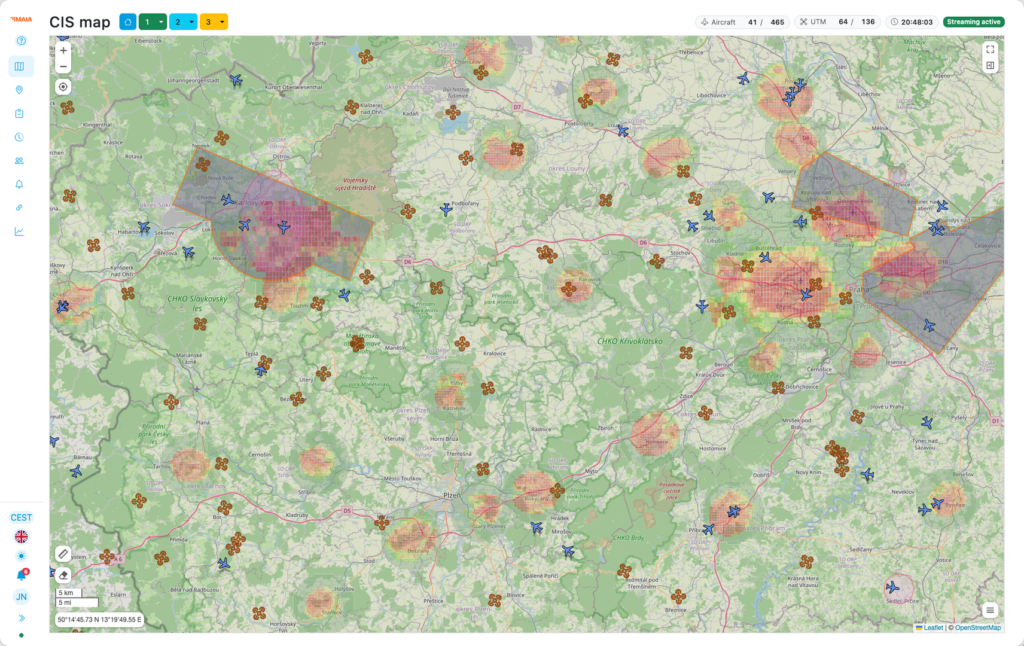
CIS+ (Common Information Service) system, built on the MAIA platform, was developed by
UpVision, a member of CSG’s Aerospace & Defence Electronics subdivision. It will now
undergo operational implementation and certification, with full deployment expected in the
second half of next year.
As part of the implementation of U-space, the delivered system will serve as a digital backbone
enabling the safe coordination of a rapidly growing number of drones with other airspace users. In
practice, this is an essential step in response to the rapid development of autonomous drone
applications across various sectors. In countries such as the United States, Ireland, the United
Kingdom and Finland, for example, private companies are already establishing drone delivery
networks that transport customer orders directly to designated addresses.
Similar technologies can be expected to emerge in the Czech Republic in the near future. However,
this requires the establishment of appropriate operational conditions and the maintenance of air
traffic safety in an environment where conventional manned aircraft and large numbers of unmanned
systems will operate side by side. All airspace users need access to up-to-date, real-time information
on airspace, its restrictions and ongoing traffic. Under the European regulatory framework, the U-
space concept requires such information to be shared through a Common Information Services
Provider (CISP). The MAIA platform meets these requirements, making the implementation of the
CIS+ system an important milestone on the way to the practical launch of U-space.
“We are proud to have developed a system for Air Navigation Services of the Czech Republic that
connects the world of drones with conventional air traffic management. CIS+ provides all U-space
participants with a single, reliable and up-to-date picture of the airspace. This is a fundamental
prerequisite for enabling drones to operate safely and at scale in Czech skies. We believe that the
experience gained in the Czech Republic can also serve as an inspiration for other European
countries,” said Štěpán Alexa, CEO of UpVision.
Digital backbone for safe drone operations in U-space
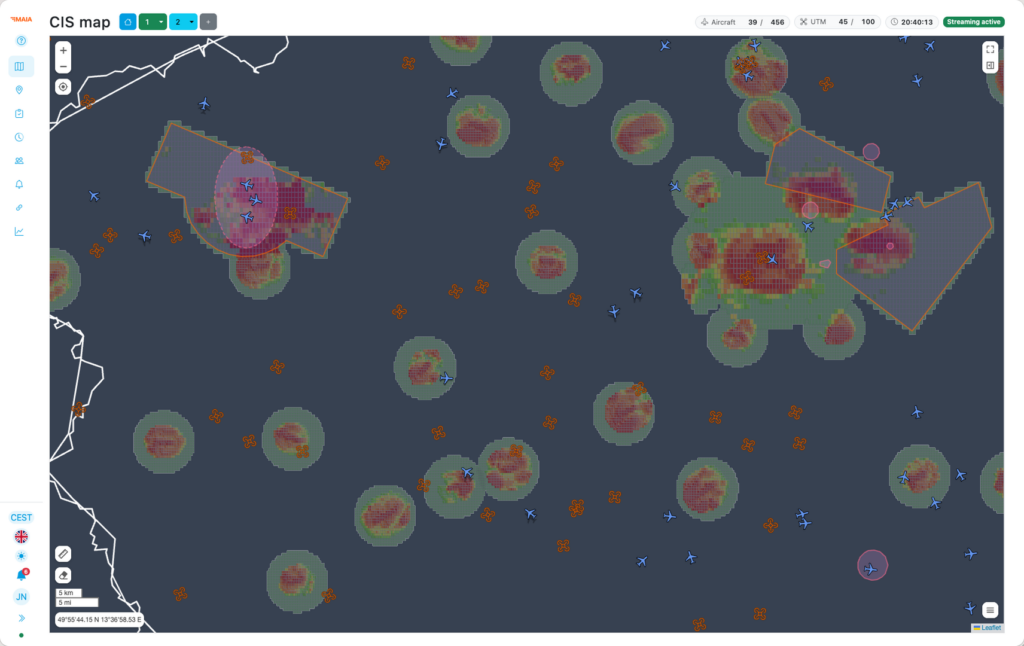
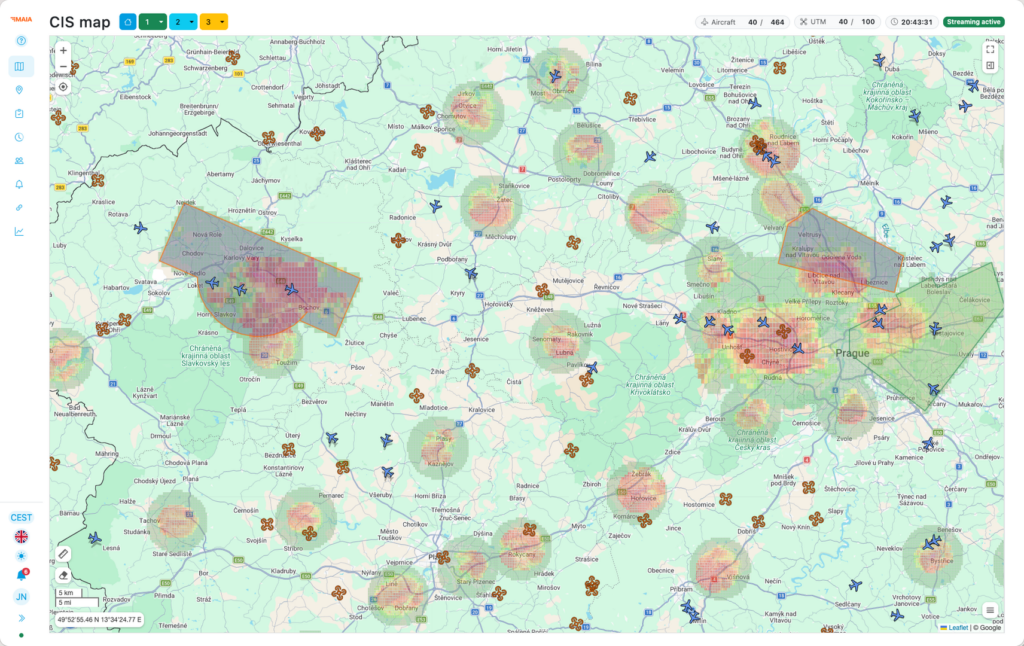
CIS+ provides several key digital services. These include the consolidation and distribution of
information on geographical zones and restrictions applicable to unmanned aircraft operations, the
sharing of approved flight authorisations, the real-time identification and tracking of drones, and the
provision of information on both manned and unmanned aircraft operations.
The system also enables the sharing of information on deviations from approved drone flight plans
and the delivery of meteorological data from ANS CR operational systems to U-space service providers. The solution also includes services for locating U-space service providers and sharing
information about their availability.
A key feature of CIS+ is its direct integration with the conventional air traffic management system.
Operational information and meteorological data can be transferred from ANS CR’s ATM system
directly into the U-space environment through the relevant interface. The system also enables the
digital processing of operational requests falling within the remit of ANS CR.
From phone calls and emails to automated coordination
The practical benefits of the system will become apparent, for example, when conditions in the
airspace change. If ANS CR announces a temporary restriction, for instance due to an air ambulance
operation, an air show or a visit by a head of state, CIS+ digitally distributes this information to all
connected U-space service providers. They can immediately take it into account when planning and
managing drone flights.
Similarly, the system can process a request to operate a drone in airspace where coordination with
ANS CR is required. The request is forwarded for assessment via CIS+, and the decision made by
ANS CR is subsequently distributed automatically to the relevant service providers.
CIS+ also enables the sharing of information on flights that have already been approved. When
drones operated through different U-space service providers share the same airspace, each provider
can access the information needed to coordinate operations. This reduces the need for individual
coordination between separate entities and creates a common operational picture.
For UpVision, the delivery of CIS+ to ANS CR represents an important reference for the further
development of its technologies in Europe. The experience gained through the implementation of a
national solution can also be applied to the deployment of U-space infrastructure in other European
countries.
The growing importance of unmanned systems extends beyond civil aviation. Drones are
increasingly being used by armed forces, the police, firefighters, emergency medical services and
critical infrastructure operators. As the number of their missions increases, so does the importance
of systems that enable their safe coordination and information sharing between different
organisations. Platforms such as MAIA are therefore becoming an important part of the future digital
infrastructure for airspace management in both the civil and security domains.
The MAIA platform was developed by a multidisciplinary team of experts in software development,
air traffic management, U-space, digital infrastructure and security technologies. The platform builds
on experience gained through European projects including CERTIFLIGHT, U-Space4UAM, ATM-
EXCITE and others.