


Christos Kotsidimos is a technology and systems architecture executive, with an interest in the convergence of distributed systems and modern warfare.
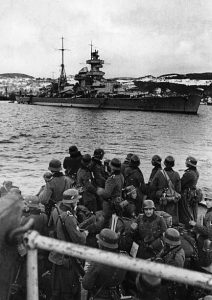
Modern defence planning still speaks the language of platforms — jets, ships, tanks, helicopters, batteries. Budgets are structured around platforms. Procurement cycles revolve around them. Doctrines describe how to deploy them. But war is no longer won by the platform, war is won by the function the platform performs inside a larger system and as soon as you see that, the entire architecture of defence looks outdated.
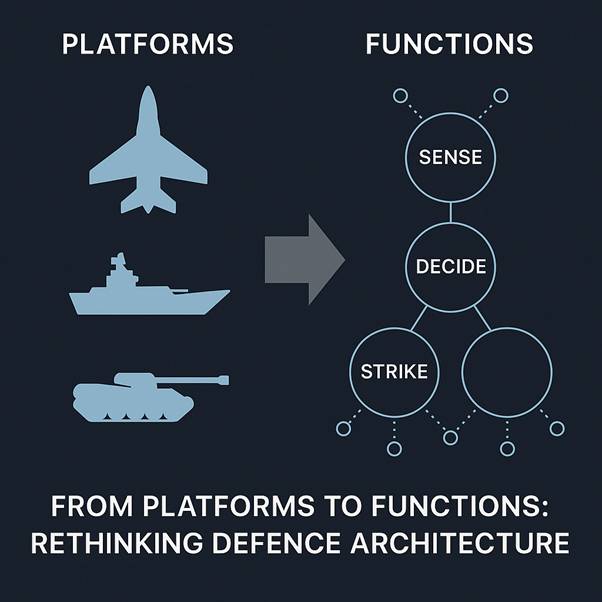
The Problem with Platform-Centric Thinking
A platform is a self-contained object with:
- its own sensors
- its own weapons
- its own crew
- its own maintenance ecosystem
- its own command chain
It is treated as a silo. But modern conflict is no longer siloed, It is distributed, fast, electronic, and algorithmic.
A jet alone doesn’t deliver air superiority, a ship alone doesn’t deliver sea control, abattery alone doesn’t create deterrence.
Victory requires a connected function:
- sensing
- identifying
- deciding
- striking
- sustaining
- adapting
Platforms don’t win these, functions do.
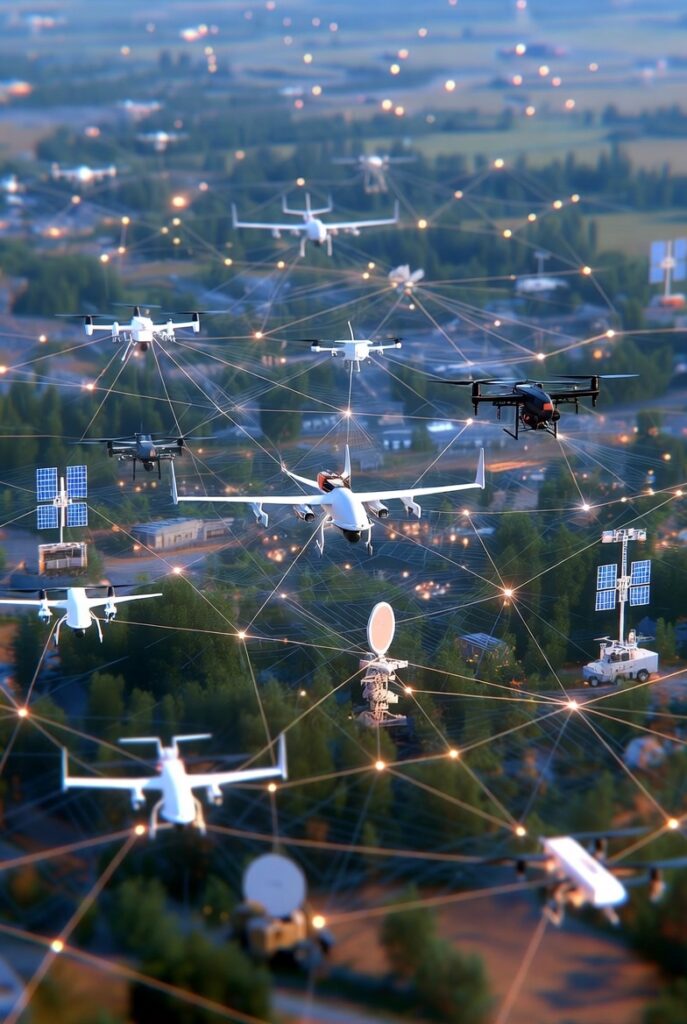
Function-Centric Defence: A Systems Architecture View
In cloud architecture, we long ago stopped thinking about “servers” and started thinking about services, APIs, and value streams. Defence is at the same inflection point.
A modern military is not a collection of platforms, it is a system-of-systems, where:
- every sensor contributes
- every shooter listens
- every unit is a node
- every action publishes telemetry
- decisions are distributed
- effects are layered
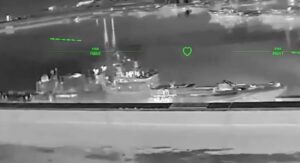
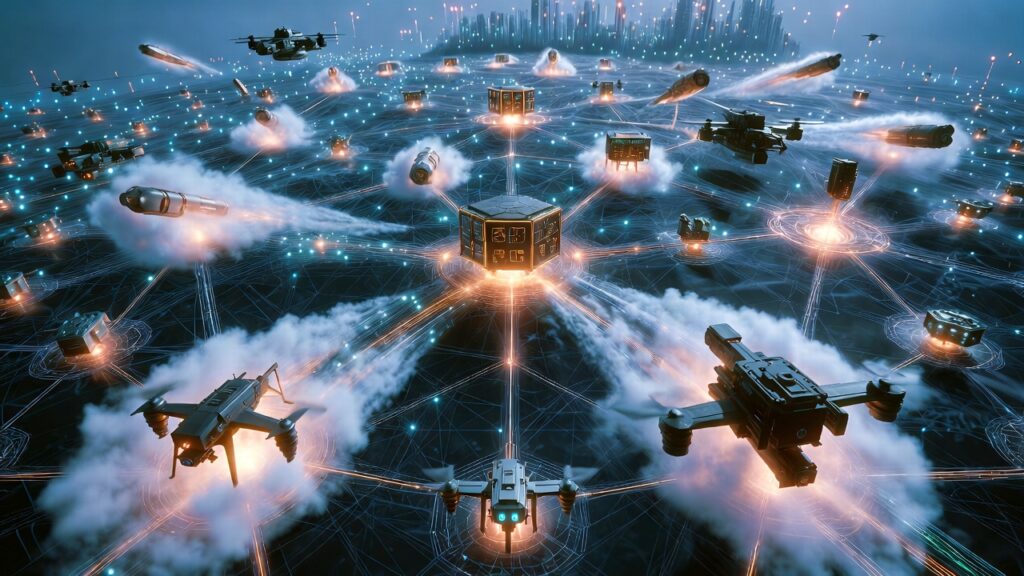
This is what militaries call a kill chain, but the real future is a kill web — a network where multiple sensors, shooters, and decision nodes collaborate in parallel instead of sequence. Think less like a fleet of vehicles, think more like a distributed compute cluster.
”Platforms Become Clients, functions Become the Architecture.”
A platform-centric military asks: “What can this system do?”
A function-centric military asks: “Who can best perform this function right now?”
The difference is profound.
Function: FIND
- drones
- satellites
- radars
- soldiers with tablets
- passive RF sensors
Function: FIX
- ISR UCAVs
- EW triangulation
- optronics
- data fusion
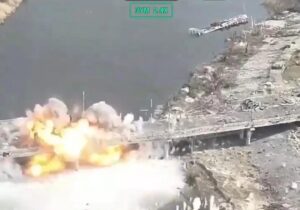
Function: FINISH
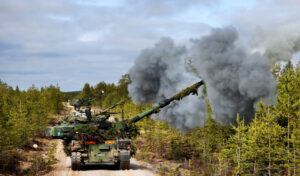
- artillery
- UCAVs
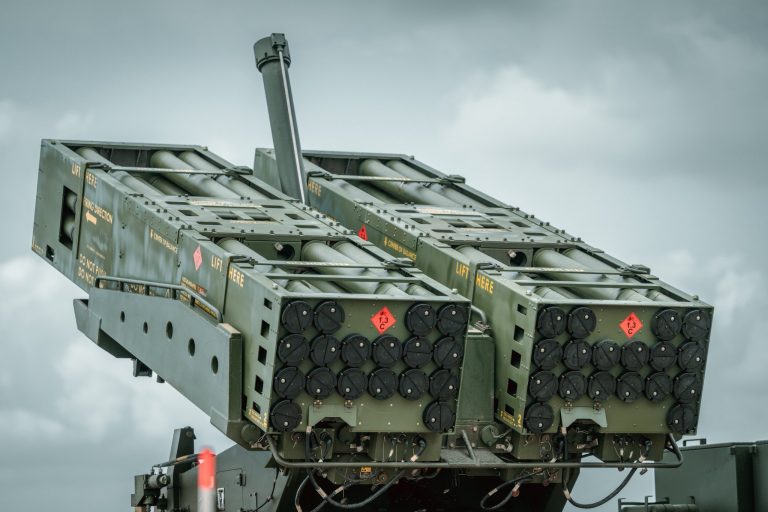
- PULS
- loitering munitions
- F-35 strike packages
- naval missiles
Any platform can fulfil a function if plugged into the architecture. The question is no longer who owns the sensor, but who can provide the data. The question is no longer who owns the shooter, but who can deliver the effect fastest and safest.
Why Small Nations Must Adopt This First
Large militaries can afford inefficient, redundant, overlapping platforms, small nations cannot. A platform-centric force tries to match the adversary system by system — an impossible, expensive race. A function-centric force beats the adversary by:
- faster kill chains
- cheaper shooters
- resilience through distribution
- elastic UCAV capacity
- decentralised C2
- logistics orchestrated like cloud workloads
The platform race is unwinnable, the architecture race is not.
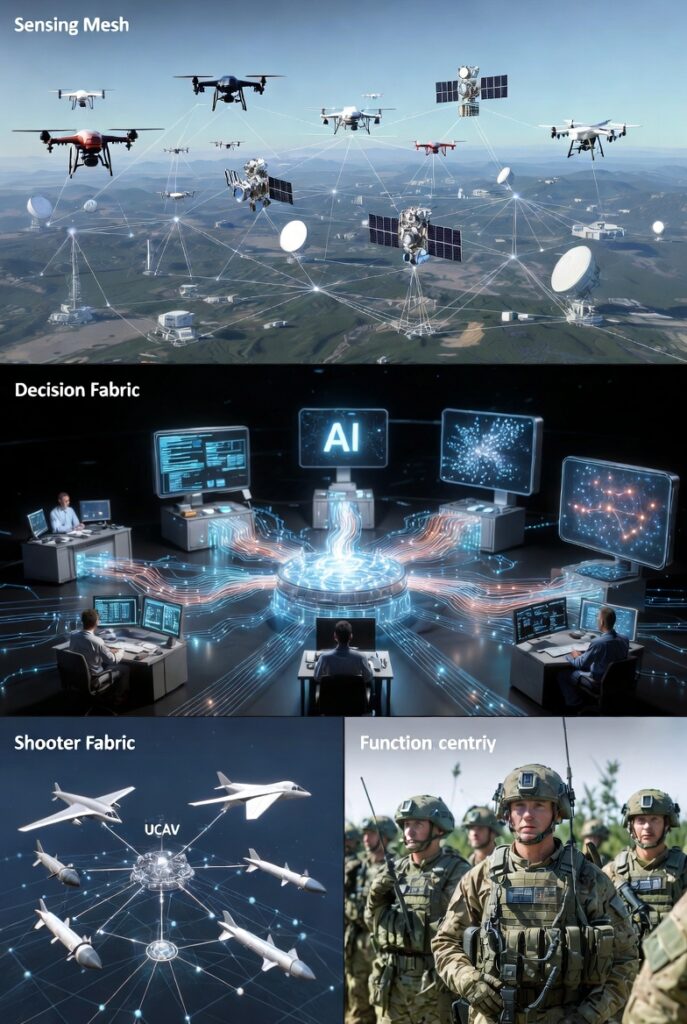
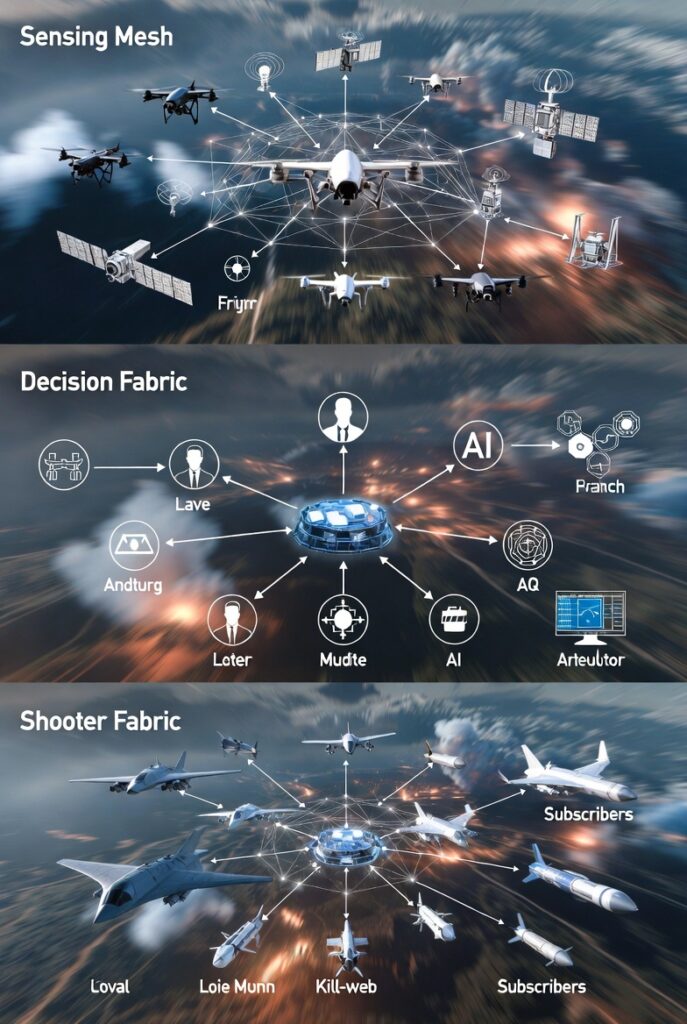
The Kill-Web Model: A Function-Based Military
A kill-web replaces platform silos with three interconnected fabrics:
1. Sensing Mesh (the ISR fabric)
All sensors publish to the battlespace picture:
- drones
- AEW
- coastal radars
- soldiers’ optics
- satellites
- EW receivers
2. Decision Fabric (the C2 layer)
Distributed decision nodes:
- human operators
- automated triage systems
- battle management algorithms
- local control at the edge
3. Shooter Fabric (effect layer)
All shooters subscribe:
- UCAVs
- loiterers
- artillery
- naval missiles
- air-launched weapons
Sensors → decision → effect.
Not linearly, but in parallel, across many nodes. A kill-web is not a chain, it is a mesh, like a service architecture.
What This Means for Force Design
A platform-centric defence asks:
- How many jets do we need?
- How many ships?
- How many tanks?
A function-centric defence asks:
- What sensing coverage do we need?
- What decision latency is acceptable?
- What strike volume is required?
- What logistics throughput must we guarantee?
These questions lead to very different forces:
- more drones than jets
- more loiterers than artillery shells
- more software than hardware
- more distributed C2 than command posts
- more micro-sensors than radars
- more UCAV brigades than attack helicopters
This is not science fiction, this is simply what the architecture of the battlespace demands.
Platforms Still Matter — But They Are No Longer the Center
Platforms don’t disappear, but they lose primacy. They become:
- shooters in the web
- nodes in the mesh
- clients of a larger defence cloud
- contributors to a function, not owners of it
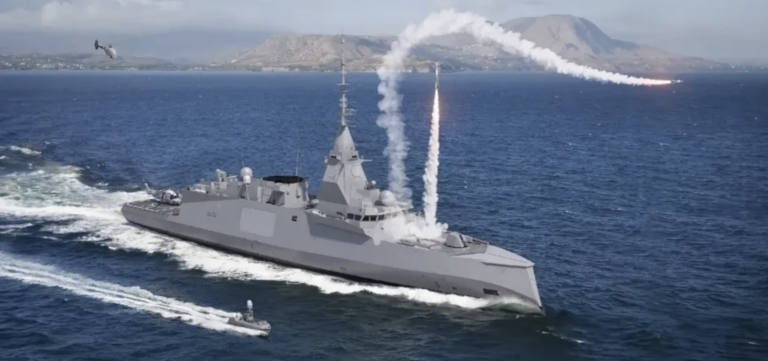
A fighter jet is just one more shooter, a frigate is just one more sensor + missile node, a tank is just one more mobile fire platform. In a kill-web, value shifts away from the platform and toward the architecture. This is how a small, well-architected force competes with a much larger one.
Toward a New Defence Paradigm
For the past 50 years, militaries have procured platforms like enterprises procured monolithic applications. We are now shifting to:
- microservices
- distributed systems
- service meshes
- orchestration layers
- sensor fabrics
- software-defined capabilities
Defence transformation will follow the same trajectory — slower, but inevitable. This is the moment to design a function-centric, kill-web-enabled force for 2040. The militaries that adopt this thinking first will not simply modernize. They will outpace, outmaneuver, and out-adapt adversaries still thinking in platforms.
Platforms are the past. Functions are the future.