


- Embraer will take part in key discussions on the future of agricultural aviation, the challenges of increasing farm productivity, and operational safety
- The Ipanema 203 will perform a demonstration flight during the event in Goiás, from August 18 to 20
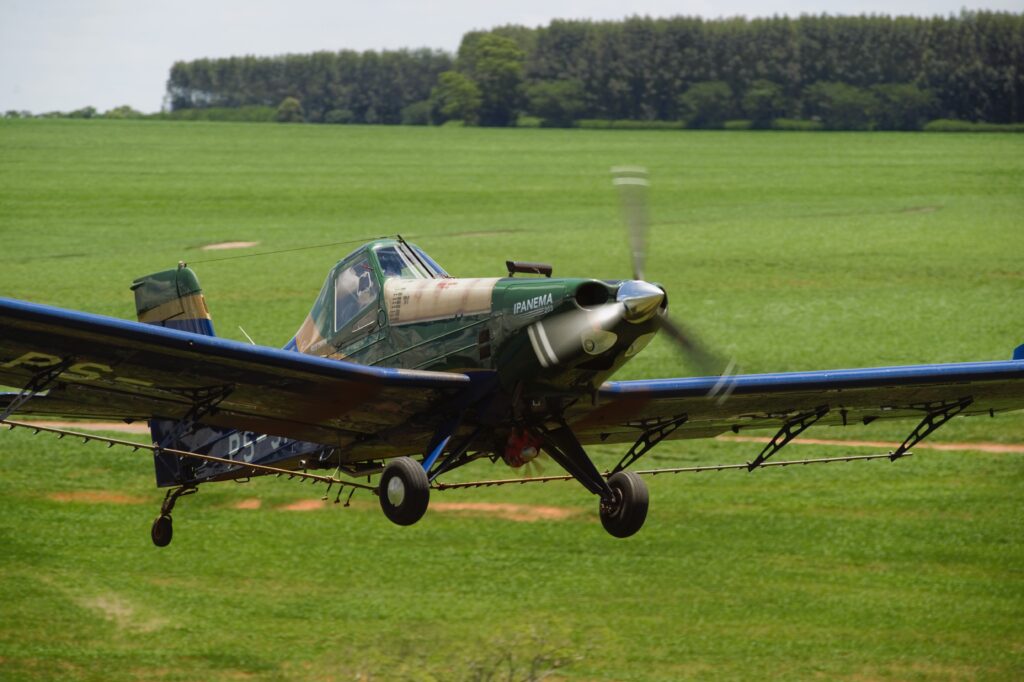
Embraer, will participate in the Brazilian Agricultural Aviation Congress, taking place from August 18 to 20 in Goianápolis, Goiás, showcasing the Ipanema 203, the country’s best-selling cropduster, with more than 50% market share in its segment. Powered by ethanol for more than 20 years, the aircraft combines advanced technology, reliability, high productivity, precision, and low operating costs.
During the congress, the Ipanema will perform a demonstration flight for operators, farmers, and other event participants. Having completed more than two decades of 100% ethanol-powered operation, the aircraft has solidified its position as a benchmark for operational efficiency and sustainability in Brazilian agribusiness.
In addition to the flight demonstration, Embraer will join key discussions with representatives from across the agricultural sector to address the challenges and opportunities facing agricultural aviation in Brazil, including the role of technology in boosting productivity, efficiency, sustainability in the field, and operational safety.
“We are honored to once again participate in Brazil’s Agricultural Aviation Congress, organized by the National Agricultural Aviation Companies Union (SINDAG). This is an important opportunity to showcase solutions that help increase the efficiency of agricultural operations by combining productivity, safety, and lower operating costs,” said Sany Onofre, Embraer’s Agricultural Aviation leader.
With more than 1,700 aircraft delivered, the Ipanema is Brazil’s best-selling agricultural aircraft. Powered by ethanol, the model is capable of spraying more than 200 hectares per hour, a performance equivalent to four large ground sprayers operating simultaneously. In addition to reducing crop damages caused by ground equipment and the helping prevent the spread of pests through soil contact, the Ipanema can contribute to yield gains of up to 15 bags per hectare, depending on the crop type and operating conditions.